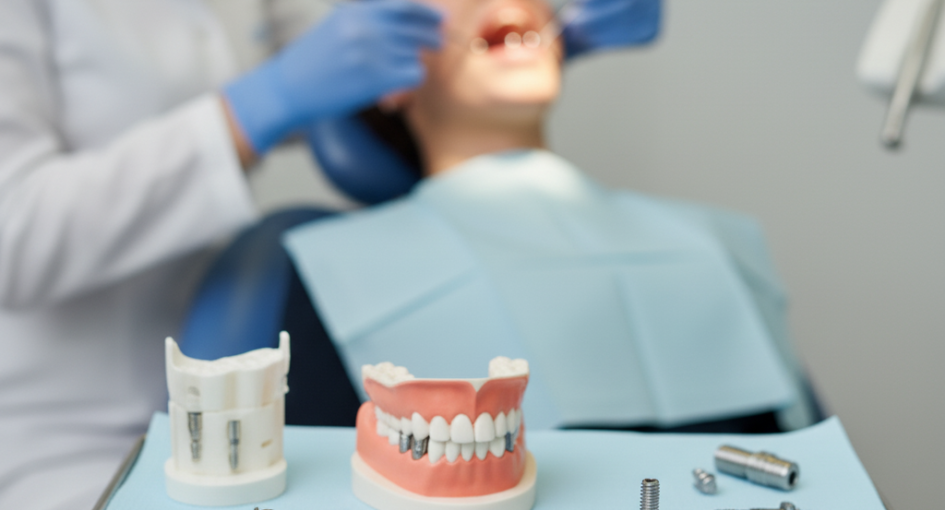
Dental implants have revolutionized modern dentistry, offering a permanent and natural-looking solution for missing teeth. But what actually happens during the implant procedure? This step-by-step guide takes you through the entire journey — from the initial consultation and jawbone assessment to implant placement and final crown restoration. Whether you're considering implants for the first time or simply curious about the process, this blog will help you understand each stage clearly and confidently, so you know exactly what to expect on your road to a restored smile.
Losing a tooth can affect your smile, confidence, and even your oral health. Dental implants are one of the most reliable and natural-looking solutions available today. They replace missing teeth permanently while restoring the look and function of a real tooth.In this guide, we break down the dental implant procedure step-by-step, so you know exactly what to expect throughout your treatment journey.
Dental Implants Statistics: Global & India Snapshot
The global dental implants market is experiencing strong growth, valued at approximately USD 10.52 billion in 2024, and expected to reach USD 13.50 billion by 2029 at a CAGR of 5.16%. This rise is driven by the increasing demand for advanced dental treatments and the growing prevalence of tooth loss across ages.
In India, the adoption of dental implants is rapidly expanding. The market was estimated at USD 143.8 million in 2023, with projections indicating significant growth in the coming years as more patients seek long-lasting solutions for missing teeth. Increased awareness, improved accessibility to specialized treatments, and dental tourism contribute to the surge in implant procedures nationwide.
While implants are becoming mainstream globally, awareness and acceptance are still developing in India—meaning a rising number of patients are now exploring implants over removable or temporary tooth replacement options. This sets India up as one of the fastest-growing implant markets worldwide.
Worldwide, dental implants continue to be recognized as the gold standard for restoring oral function and aesthetics, with the market expanding due to aging populations and a higher focus on quality of life.
What Makes Dental Implants the Best Choice?
Dental implants are small titanium posts placed into the jawbone to act as artificial tooth roots. Once healed, they support a crown that looks and feels like a natural tooth.
Benefits include:
Long-lasting and durable (often decades)
Prevents bone loss in the jaw
Improves chewing, speech, and overall confidence
No damage to neighbouring teeth
Looks completely natural
Step 1️⃣: Initial Consultation & Assessment
Your implant journey begins with an in-depth dental evaluation.
During this visit, your dentist will:
Check gum health and oral hygiene
Assess bone density through X-rays or scans
Discuss medical history and lifestyle habits
Plan the best treatment timeline
If your jawbone has weakened due to missing teeth for a long time, bone grafting may be recommended to strengthen the site.
Step 2️⃣: Pre-Surgical Procedures (If Needed)
Before the main implant surgery, some patients require preparatory treatments such as:
Tooth Extraction If the damaged tooth is still present, it will be removed.
Bone Grafting Bone from another area or synthetic material may be added to rebuild the jawbone.
Healing from these steps may take several weeks to months — but this ensures stronger implant support and long-term success.
Step 3️⃣: Dental Implant Placement Surgery
This is the most crucial stage of the procedure.
What Happens During Surgery?
Local anesthesia or sedation is given for a pain-free experience.
A small incision is made in the gums to expose the jawbone.
A precise hole is drilled to insert the titanium implant post.
The implant is fixed securely into the bone.
The gums are stitched and a temporary healing cap may be placed.
The entire process typically takes about 30–60 minutes per implant.
Step 4️⃣: Healing & Osseointegration
After placement, the implant becomes a natural part of your jaw through a process called osseointegration.
During the healing period:
Bone cells grow around the implant
The implant becomes stable like a real tooth root
This process usually takes 2 to 6 months, depending on individual healing ability.
✅ You may be given a temporary crown or denture during this time.
Step 5️⃣: Abutment Placement
Once the implant is stable, the next step is to attach the abutment — a connector that holds the final crown.
This is a minor procedure:
The gum is reopened slightly
The abutment is fixed onto the implant
Healing continues for 1–2 weeks
This step prepares the foundation for your final tooth.
Step 6️⃣: Final Crown Placement — Your New Smile!
The final stage involves fabricating a custom-made crown that matches your natural teeth in:
✔ Shape ✔ Size ✔ Color ✔ Bite alignment
Once fitted, your new tooth will look and function just like the real one!
🎉 This is the moment most patients are waiting for — a restored smile that feels complete.
How Long Does the Entire Procedure Take?
The full timeline varies based on healing and additional treatments:
Stage
Estimated Time
Consultation
1 visit
Extraction / Bone Graft
Weeks–Months
Implant Surgery
1 day
Osseointegration
2–6 months
Abutment + Crown
2–3 visits
Total time may range from 3 to 9 months — but the results are long-lasting and worth the wait!
Who Can Get Dental Implants?
You are likely a good candidate if you:
Have one or more missing teeth
Have healthy gums
Do not have uncontrolled diabetes or habits like heavy smoking
Have sufficient jawbone (or are willing to undergo grafting)
Maintain good oral hygiene
Your dentist will confirm suitability during your evaluation.
After-Care Tips for Long-Lasting Success
✅ Brush twice a day and clean around the implant ✅ Visit your dentist regularly ✅ Avoid smoking and chewing hard/brittle foods ✅ Use a soft-bristle toothbrush or water flosser
With proper care, implants can last 20 years or more — often a lifetime.
Possible Risks & Complications
Although rare, these issues may occur:
Infection at the gum site
Implant loosening or failure
Sinus or nerve proximity issues (in upper-jaw cases)
Gum recession around the implant
Choosing an experienced implant dentist reduces these risks significantly.
Most patients are suitable candidates, but healthy gums and sufficient jawbone are required. Your dentist will evaluate this during consultation.
Final Thoughts
Dental implants are one of the most advanced and reliable solutions for restoring missing teeth. Though the treatment takes time, each stage is designed to ensure a strong, secure, and natural-looking result.
If you’re ready to regain confidence and restore your smile permanently, a dental implant consultation is the first step toward a healthier, happier future.